
Wood siding board repair in Omaha
Softened wood, open joints and failing paint need different attention from an unlocked vinyl course. Omaha Siding Repair Pros discusses the board, the backing and the wetting pattern as separate parts of a repair. Siding Repair in Omaha, NE can include limited board replacement, but the new piece should not inherit an unresolved moisture path.
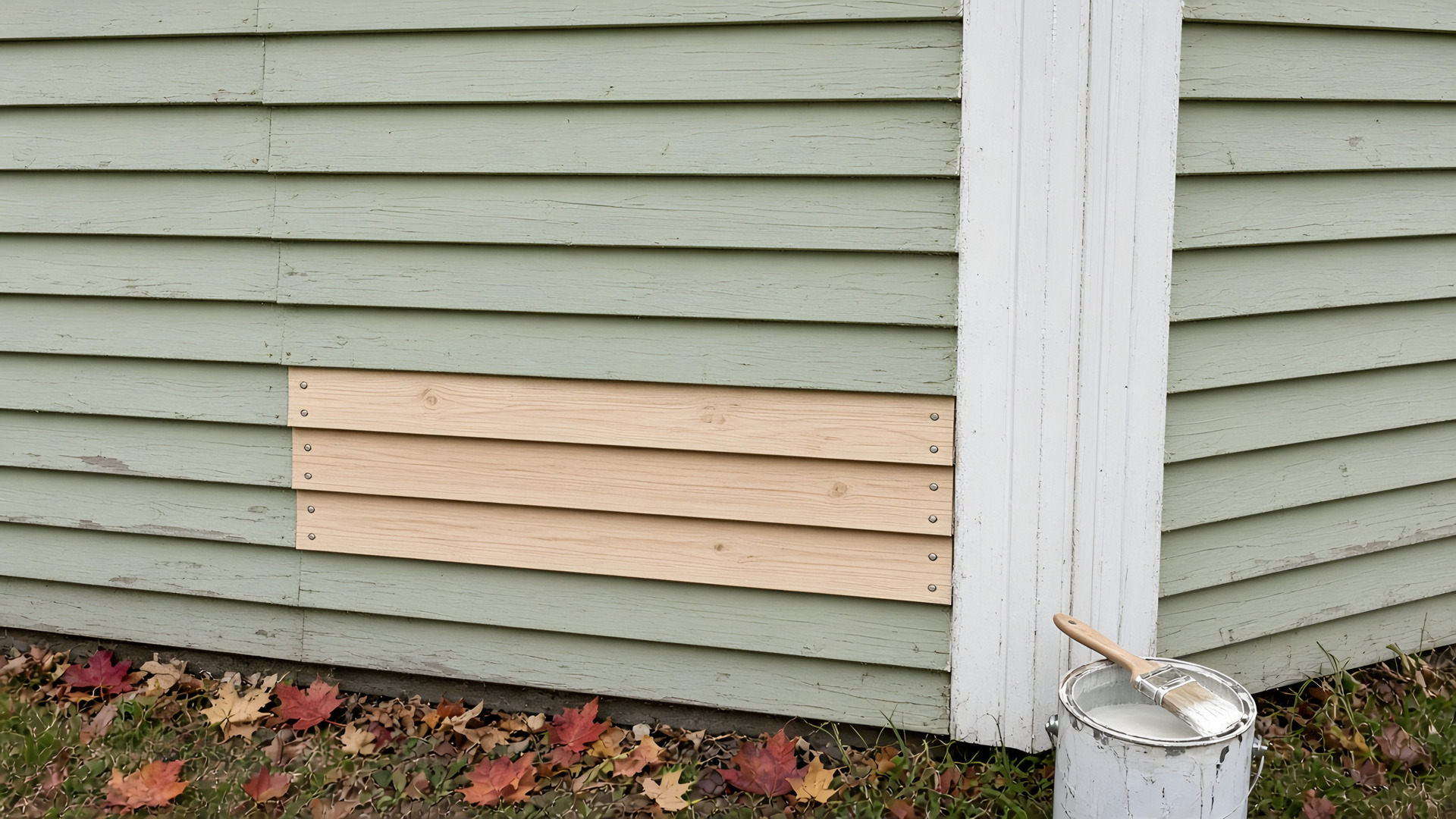
Wood clapboard replacement beside paint; illustrative supplied image.
Sound material at the cut
A board repair starts by finding a sensible boundary in material that can support the replacement.
A painted face can conceal softened edges or a damaged lower portion. The condition of adjoining boards and the backing helps establish what can remain. New wood should not be treated as a cover for a soft layer underneath.
Cut ends, butt joints and lap exposure shape how water leaves the wall. End grain takes in water readily, so the chosen treatment and finish need to address those ends as well as the visible board face. The details depend on the material and finish system.
An isolated split is different from a recurring wet area beneath trim or a flashing transition. The scope should separate replacement boards from any work needed at that transition. Paint alone is not a repair for a softened board.
Three wood repair decisions
Keep the choices visible in the written scope.
- 01 / LOOK
Find sound boundaries
Assess the damaged length, adjacent joints and accessible backing.
- 02 / SCOPE
Identify the wetting path
Discuss trim, flashing and repeated wetting separately from the board quantity.
- 03 / FIT
Plan joints and finish
Choose the replacement profile, support, cut-end treatment and finish boundary together.
Finish is part of the boundary
A new board and an old painted face may not weather alike.
Discuss profile, texture, joint position and the area to be finished before work starts. A narrow patch can still be visible through differences in paint build or exposure. A wider finish area may be worth comparing with an isolated board patch.
Older frame houses in the Omaha metro do not all use the same species, thickness or lap profile. An image can help describe the face, but material selection and the amount of softened backing require an assessment of the actual wall.
No per-board figure can price concealed conditions. Ask how removal, disposal, surface preparation and finish are separated from any further wall-layer work. Confirm permit requirements with the applicable city for the proposed scope.
Wood repair questions
These answers explain cut ends, short boards and moisture sources.
- End grain can take in water readily. Replacement work should account for suitable treatment of cut ends as well as the visible face finish. Details depend on the wood, finish system and surrounding wall.
- Joint locations and support matter, so short pieces are not interchangeable with a properly planned board layout. The repair should consider existing joints, attachment and water-shedding details rather than simply filling the opening.
- Only if the source is also identified and dealt with. Failed joints, flashing and repeated wetting can affect the new piece. The written scope should distinguish board replacement from any separate drainage or trim work.
Discuss this wall scope
Tell Omaha Siding Repair Pros the material, the affected wall and what has changed. Call to check availability.